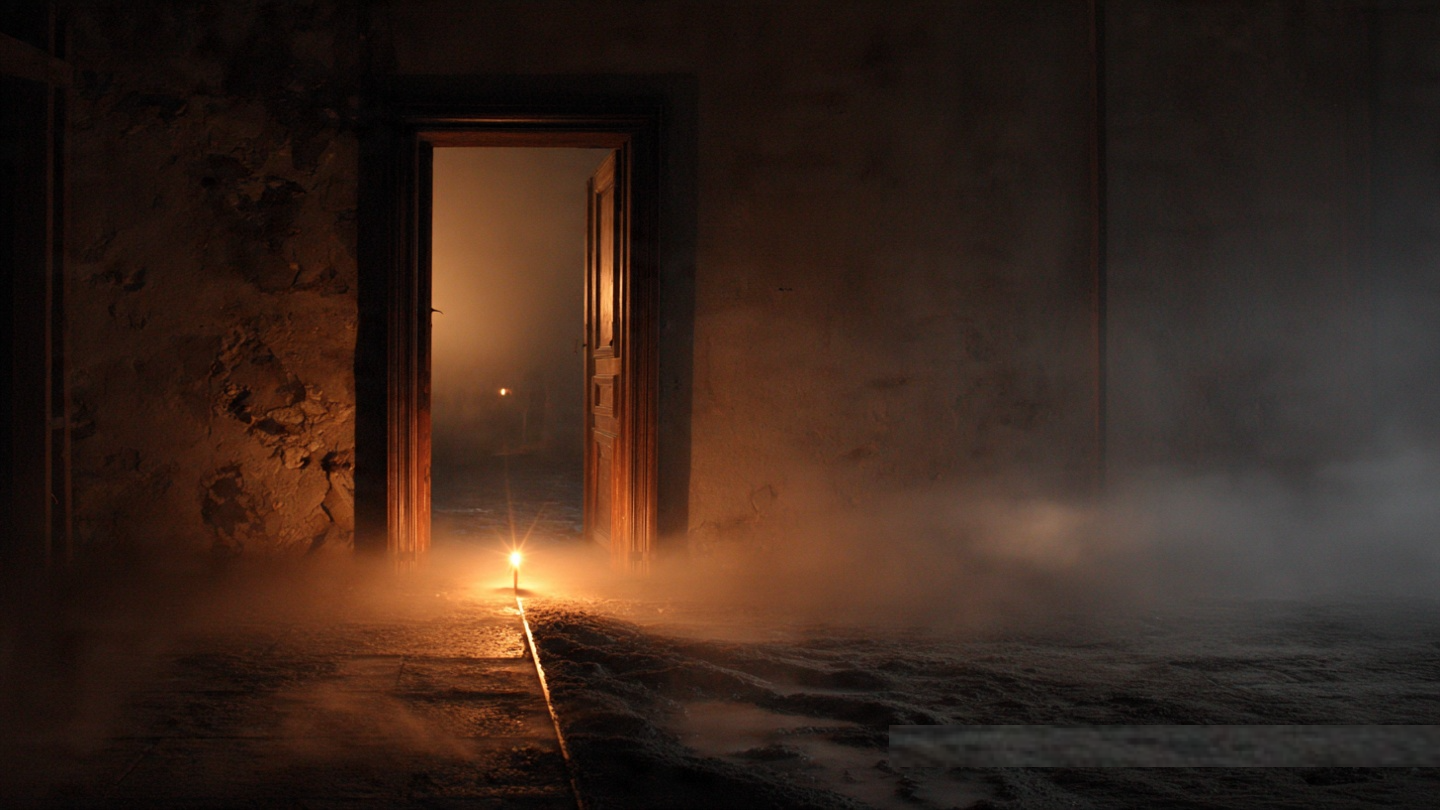
What a Threshold Working Is
A threshold working is a conditional boundary — an if/then, not a command. You are not forcing anyone out and you are not restraining anyone's will. You are standing at the edge of what's yours to protect, naming the behavior that has to stop, and stating plainly what happens if it doesn't. Then you step back. The rest is theirs to choose.
It sits between two more forceful workings you may already know:
- Banishing removes — it pushes something out of a space entirely, no matter its will
- Binding restrains — it restricts what someone can do, whether they consent to it or not
- Threshold working warns — it sets the terms and lets the choice remain theirs
Why It's Better Than Binding or Banishing
Binding and banishing both work — but they both take the choice away from the other person entirely, and that has a cost. A binding restrains someone's will outright, whether earned or not. A banishing forces removal without ever giving the offending party a chance to correct course. Both can boomerang back harder than intended, and both put the full weight of the outcome on you, the one casting the working.
A threshold working carries less of that weight, because you are not the one deciding the outcome. You are only the one setting and speaking the terms. If the line is crossed anyway, the consequence isn't something you did to them — it's something they chose for themselves, with eyes open. That is a cleaner working to carry, and it is also, scripturally, the pattern God himself uses far more often than outright force.
The Scriptural Ground
This isn't a new idea dressed up in old language. It's one of the oldest patterns in scripture — authority states the boundary, the other party keeps the choice, and whatever follows is the natural harvest of what they chose.
God sets life and death, blessing and curse, before the people — and tells them to choose. He doesn't choose for them. He names the stakes and steps back.
The watchman's job is to sound the warning. If he warns clearly and the person doesn't heed it, the blood is on their own head — not the watchman's. Speak the threshold working once, plainly, and what follows is no longer yours to carry.
Even Christ, casting out the legion, doesn't dictate every term. He sets the boundary — you cannot remain here — and lets the spirits choose where they go. He doesn't control what happens next. What happens next belongs to the choice made within the boundary he set.
A curse without cause has nowhere to land, and whatever is sown is what gets reaped. The consequence clause of a threshold working isn't a curse you're producing — it's a law you're simply naming out loud.
The Incantation
This is, at its bones, FAFO given proper form. The line is the warning. What waits past it is the finding out. You are not the one making that part happen — you are only the one honest enough to name it before it does.
Speak this not to the offending party's face, but as a declaration — to the universe, to the watching unseen, to God as witness. This is spoken away from them, so the choice remains untouched by confrontation.
What you do beyond it is yours to weigh.
I do not bind your hand or your tongue tonight —
I only name what's wrong and what is right.
Cross not this line around (name of client) again,
or reap what you have sown of your own hand.
This is not my curse to give or to withdraw —
it is only the harvest of the oldest law.
Stay behind it, and this ends here tonight.
Cross it, and you awaken something bigger than your spite.
I have warned it plain, I have warned it whole,
the choice and its cost are now your own to hold.
By the power of three, blessed by the Holy Trinity,
I proclaim this — so shall it be.
So it is witnessed. So it is known.
The Ritual
This working is simple by design — the power is in the clarity of the terms, not in elaborate tools.
What You'll Need
- A white or plain candle (protection, clarity)
- Salt or a small line of dirt from your own threshold
- A slip of paper with the offending party's name
- A photo or item belonging to the client, if working on their behalf
The Steps
- Ground and Witness Light the candle. Hold the client's item or photo, or simply speak their name aloud, to anchor the working to them specifically.
- Draw the Line Lay the salt or dirt in a straight line — across a threshold, around the candle, or around the paper bearing the name. This is the physical line the incantation names.
- Speak the Threshold Read the incantation aloud, filling in the name and the client's name where marked. Speak it once, clearly, without rushing — this is the watchman's warning, and it only needs to be sounded once to stand.
- Release the Outcome Fold the paper with their name and set it beyond the salt line — outside the boundary, not destroyed, not bound. This shows the choice remains theirs.
- Let the Candle Finish Allow the candle to burn down fully if you're able, or snuff it (never blow it out) and relight it at the same time the next day until it does. This keeps the working lit until it has fully spoken.
- Step Back Do not check on it. Do not repeat it daily. A threshold, once set and witnessed, doesn't need to be re-drawn — that would shift it from a boundary into a binding.
What happens after belongs to them. If they cross it, you have not cursed them — you have only spoken true what was already going to be true. If they don't, the line simply stands, unused, as it should. Either way, your hands are clean and your client is protected — not by force, but by a boundary spoken plainly and left to do its own quiet work.
I only marked the line.
What crosses it, crosses knowing —
the choosing was never mine.