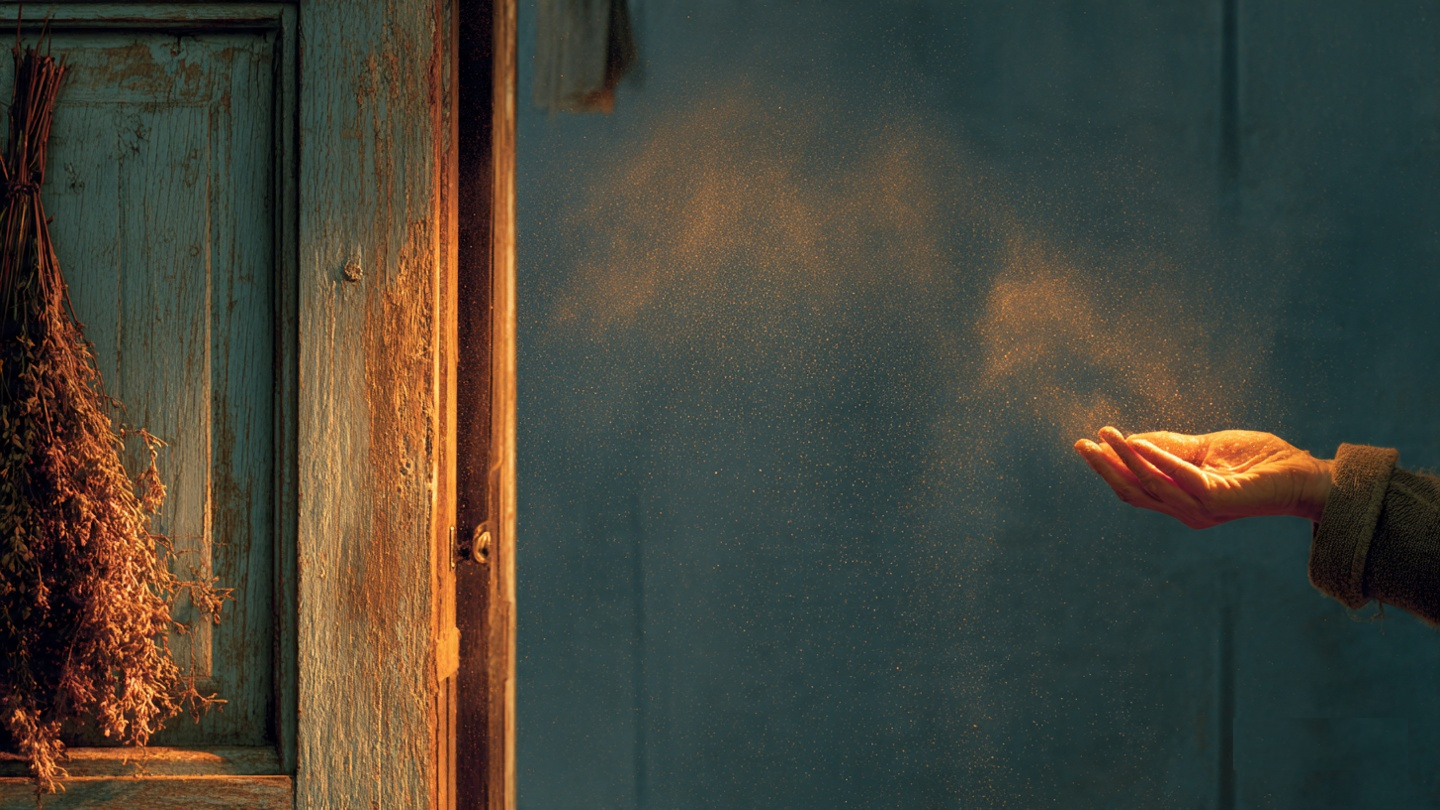
The Door as the Houses Mouth
Appalachian folk belief never drew a hard line between the spiritual and the practical. A door was a door — but it was also the only place where the outside world and the inside world touched. Everything that came into a household came in through that frame: visitors, news, sickness, money, strangers, luck both good and bad. Old-timers spoke of the threshold the way you'd speak of a mouth or an open hand. What you let cross it, you took into the body of the home.
This is why salt was thrown over a shoulder near a door, why a horseshoe hung above one pointed up "to keep the luck from running out," why brides were carried over thresholds, and why a broom was kept behind the door rather than out of sight — ready to sweep trouble back out before it could settle. The granny witch tradition didn't invent the idea that doors needed tending. It inherited it, the same way it inherited everything else: through necessity, repetition, and grandmothers who didn't explain themselves, only showed you what to do.
Scripture itself carries this same instinct — that the doorway is a place worth marking, worth dedicating, worth writing on. The mountain families who kept their Bibles open on the table and their cinnamon in the cupboard didn't see a conflict there. Marking the door was marking the door, whether it was done with a verse, a blessing, or a pinch of something warm carried on the breath.
Why the Priest Came Once a Year — and Why That Wasn't Enough
In the older Catholic and Episcopal communities scattered through Appalachia, the custom of the annual house blessing held on long after it faded elsewhere. A priest or circuit preacher would come through, often around Epiphany, and bless each homes door — sometimes literally chalking the lintel with the initials of the wise men and the year, a custom still practiced in some places today. It was a once-a-year reset: a formal, sanctioned marking of the threshold as protected ground.
But a year is a long time to leave a door untended. Babies were born, debts came due, neighbors fell out, and winters got hard between visits. The women who couldn't wait for the circuit preacher learned to do their own small blessings — monthly, sometimes weekly — with whatever was close at hand. Cinnamon, being common, cheap, and already understood as something that "warmed" a house, became one of the most repeated tools for this kind of work. It didn't replace the priests blessing. It filled the months in between.
The Rite
This version is kept close to the old kitchen-witch practice — simple, repeatable, built from what's already in the spice rack. It's meant to be done on the first of the month, though some keep it tied to the new moon instead, since both mark a fresh start.
What Youll Need
- Ground cinnamon — straight from the spice rack, nothing fancy required
- Your front door, and the ground just outside it
- A clear, specific intention for the abundance you want to invite
The Working
- Stand outside your front door, facing it, the way a visitor would.
- Take a pinch of cinnamon into your palm.
- Hold your intention — not "money" in general, but the specific opportunity, the specific relief, the specific abundance you're calling toward your house.
- Blow the cinnamon from your palm toward and through the doorway, letting your breath carry it across the threshold.
- As you blow, speak the words.
- Sweep up whatever cinnamon didn't make it inside — or don't. Some keep this step as a small act of not wasting what was given; others let the wind take it. Both are fine.
Prosperity enters as I please.
Why Cinnamon
Cinnamons place in prosperity work isn't a modern invention — it runs through old hoodoo, European folk magic, and Appalachian kitchen practice alike, largely because of what the spice itself does. It's warming, it's a little sharp, and historically it was costly enough to be associated with wealth and trade long before it sat cheap on a grocery shelf. A spice that once crossed oceans to reach a mountain cabin carried the memory of that distance and value with it.
Burning it, sprinkling it, or blowing it across a threshold were all common ways of using a small amount to do outsized symbolic work — the same logic behind why a single coin was sometimes tucked under a new doormat, or why a bit of sugar was kept by the door "to sweeten what comes in."
Other Threshold Practices for the First
The cinnamon rite is the best known, but it's one of several first-of-the-month customs that lived alongside it in mountain households. None of these require more than what's already in the house.
Rabbit, Rabbit
Saying "rabbit, rabbit" as the very first words spoken on the first of the month — a widespread folk custom said to ensure good luck through the weeks ahead.
Sweeping Out
A thorough sweep of the floors on the last day of the old month, pushing dust and old energy out the back door before the new months first sweep begins fresh at the front.
New Money In
Some households placed a fresh coin or new bill on the windowsill or in the doorway on the first, "to draw its kin" toward the house over the coming weeks.
First Foot
An old belief that whoever — or whatever — first crosses the threshold on a new month or new year sets the tone for what follows; some still arrange for a welcome guest to be that first foot.
None of this requires a robe, an altar, or anything purchased for the occasion. That's the heart of granny witchcraft and kitchen magic both — the conviction that what's needed is usually already in the house. A door. A spice rack. A breath. A month's worth of hope, set loose at the threshold on the day it's freshest.
The granny came every month with her cinnamon and her breath.
Between the two of them, the door was never left untended —
and the house, ever quite alone.