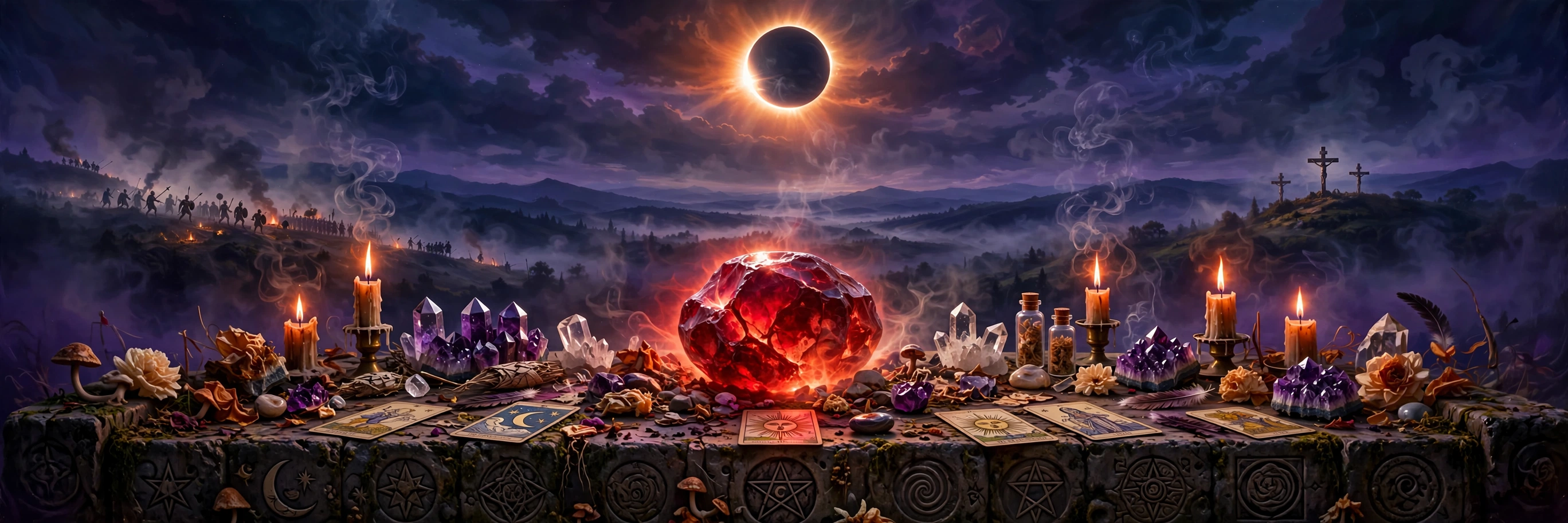
The One I Have Never Replaced
It came to me right before she passed, and in everything that came apart afterward, it went somewhere I have never been able to trace. I have held a great many stones since, sold under the same name, and none of them have ever looked right in my hand. They lean green, with a few small red flecks scattered like an afterthought. Mine was the reverse — red first, green second, if the green was there to notice at all.
For years I took that as a sign I was misremembering, or that I would simply never find one like it again. What I have learned since is that bloodstone was never held to a fixed ratio of red to green. There is no rule in the trade or in the mineral itself that says how much of each color a stone needs before it earns the name. Some regional bloodstone runs toward a deeper, bolder red than the textbook photos ever show. My grandmother was not wrong to call it bloodstone. She was right about the name and right about the month. The stone itself was simply a rarer face of it than most people are ever shown.
I am still looking for its twin. I have started to think that is exactly as it should be.
Describing the Stone
What most people picture when they hear "bloodstone" is the classic heliotrope: a dark, forest-green chalcedony — the same cryptocrystalline quartz family as agate and jasper — scattered with small red or reddish-brown spots. The green comes from chlorite or actinolite trapped in the stone as it formed; the red comes from hematite, iron oxide caught in the same silica and oxidized to the color of dried blood. Under Indian trade names, which supply most of the bloodstone on the market, the spotting tends to run light and scattered, a dark green field with red kept to small, distinct drops.
There is a second stone that gets confused with it constantly, and if you have gone looking for "your" bloodstone online, you have almost certainly run into it: Dragon Stone, also called Dragon's Blood Jasper. Despite the name, it is not a bloodstone or even a true jasper — it is epidote, a green mineral, shot through with patches of red piemontite. It comes almost entirely from South Africa and parts of Western Australia, and its red and green sit in bolder, more distinctly separated patches than classic bloodstone's fine spotting, closer to scales than to drops. It is a real and legitimate stone in its own right. It is simply not the same mineral wearing a similar name.
And then there is the stone that falls between the two, the one this page is really about: material still traded as bloodstone but running heavier on red than green — sometimes called African bloodstone, sometimes just an unusually saturated piece from wherever it was cut. No gemological standard fixes how many red spots a stone needs before it stops being bloodstone and starts being something else. If you are holding one that reads as red first and green second, you are not holding a mistake. You are holding one of the stone's less common faces.
A Brief History
Long before anyone called it bloodstone, it was heliotrope — Greek for "sun-turning," from an old belief that the stone could catch the light of the setting sun, or the reflection of the sun in water, and turn it the color of blood. Greek and Roman soldiers carried it into battle as an amulet and carved it into seals and signet rings, trusting a stone that already looked like it held blood to protect the blood in their own bodies. The healing use runs older still — physicians in Mesopotamia were binding it to the body for circulation and detoxification some five thousand years ago, a thread that runs in an unbroken line down to a grandmother pressing a stone into a child's palm.
The story most people know, though, comes from the Middle Ages: that bloodstone was formed when Christ's blood, flowing from the wound at the cross, fell onto a dark green jasper at his feet and stained it forever. It is a beautiful story, and it is also, by the evidence, the second thing to happen — carvers had already been cutting Passion scenes into this stone for centuries before the legend appeared in writing to explain why. The stone came first. The story was built to fit what people had already noticed.
Working With Bloodstone
Element
Earth, with a thread of Fire
Chakra
Root, reaching toward the Heart
Primary Work
Courage, grounding, and steady vitality
What It's Used For
- Steadying the body's blood and circulation, the same folk use it has carried for five thousand years
- Calling up courage before something hard — a conversation, a decision, a fight worth having
- Grounding restless or scattered energy back down into the body
- Clearing fear or stagnant feeling out of the root, so it stops running the show
- Standing your ground, plainly and without apology
How to Work With It
Carry it in a pocket on days that call for nerve, or hold it during meditation on courage — something you are working up to, or something you already survived and need to remember you can survive again. Because it bridges the root and the heart, some rest it low, the way old warriors and old grandmothers both did, and some hold it over the chest instead. Either is right. Let the stone tell you where it wants to sit.
Cleansing & Charging
Running water suits it well, or an overnight rest buried in the earth — both cleanse and charge it in the same motion. Sunlight or moonlight work just as well if water or soil are not handy; bloodstone is safe in direct sun and will not fade. It is a hard, durable stone, but treat it gently around harsh cleaners, the same courtesy you would give any stone you plan on keeping a long time.
Stone Pairings
Hematite
Shares the old "blood stone" name and the same grounding, courage-steadying work — doubled.
Red Jasper
No subtlety about it — pure courage and steady, physical vitality.
Chrysoprase
Opens the heart chakra alongside bloodstone's root work.
Clear Quartz
Amplifies whatever intention you set with it.
and pressed it into my palm.
I remember the red before the green,
a color no chart has ever matched since.
Perhaps it was never meant to be replaced —
only carried once, by the right hands,
and carried since in memory instead.